

Yes, Irish people do wear kilts today, but the Irish kilt is a modern revival tradition rather than an ancient native garment equivalent to the Scottish Highland kilt. Medieval and early modern Irish men are better documented wearing garments such as the léine, cloak or brat, and trousers or trews. Kilt-style dress became associated with Irish identity much later, especially through revival, military, band, ceremonial, and diaspora use.
This distinction matters because Irish kilts are culturally real today without needing to be described as an unchanged survival from medieval Ireland.
Did the Irish Historically Wear Kilts?
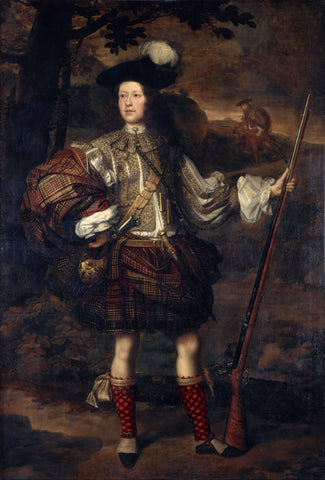
Modern Irish kilt tradition, not medieval native dress
The Scottish-style kilt was not the standard traditional garment of medieval Ireland. Irish clothing sources instead describe and depict long linen tunics called léinte, wool cloaks or brata, mantles, and trousers or trews in different periods and social contexts.
The original page correctly distinguished the léine and brat from the later kilt, but it then connected Irish kilts too directly with sixteenth-century soldiers. That leap is not well supported. It is safer to treat the modern Irish kilt as a later heritage garment.
What Did Irish Men Traditionally Wear?
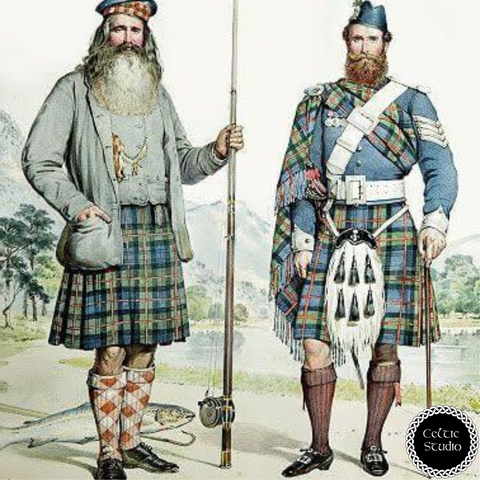
Irish dress changed substantially by period, region, wealth, and political context. A simplified list can include:
- Léine: a linen tunic or shirt, sometimes very long and full.
- Brat: a cloak or mantle worn over the main garment.
- Trews: trousers associated with Gaelic dress in Ireland and Scotland.
- Later European-style clothing: Irish people, like people elsewhere in Europe, adopted changing fashions over time.
This is why calling a modern kilt “ancient Irish national dress” creates a misleading picture of Irish clothing history.
When Did Kilts Become Part of Irish Identity?

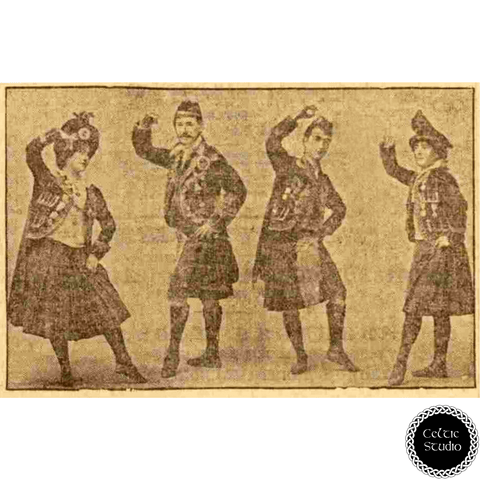
Kilt-style Irish dress became much more visible during the late nineteenth and early twentieth centuries, when Celtic and Gaelic Revival movements were actively reimagining national clothing, design, language, art, and identity.
The revival period produced many deliberate attempts to create or recover a recognizably “Gaelic” visual identity. Some of those outfits borrowed from Scottish Highland dress while combining it with Irish colours, symbols, and ideas of Gaelic clothing.
Useful distinction: a tradition does not have to be medieval to be culturally meaningful. Irish kilts can represent heritage today while still being historically understood as revival-era or modern dress.
Do Irish People Wear Kilts Today?
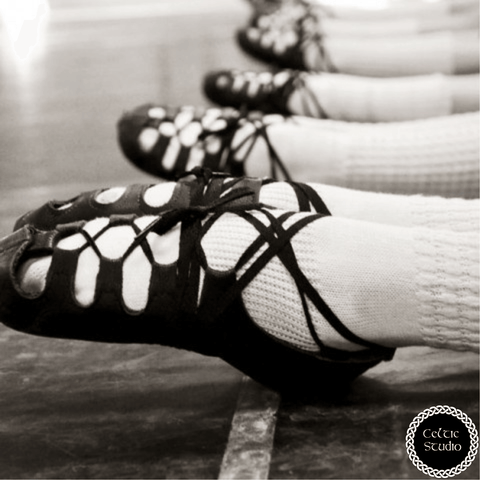
Yes. Irish kilts are worn today in some weddings, heritage events, marching and pipe-band contexts, performances, festivals, and diaspora communities. Their use is much less central to national dress than the kilt is in Scotland, but they are a recognizable modern heritage garment.
The meaning usually comes from the wearer's chosen context: Irish identity, county connection, family heritage, ceremonial use, or participation in a band or organization.
Irish vs Scottish Kilts: What Is the Difference?
| Feature | Irish kilt tradition | Scottish kilt tradition |
|---|---|---|
| Historical depth | Primarily revival-era and modern heritage use | Developed from Highland plaid clothing and the small kilt in the early modern and eighteenth-century periods |
| Typical identity link | Irish, county, organizational, military, band, or diaspora identity | Scottish national, Highland, clan, district, military, organizational, or personal tartan identity |
| Common colour approach | Solid saffron or green as well as modern tartans | Strongly associated with tartan, though not every kilt is tartan |
| Tartan history | Many Irish county and family-name tartans are modern designs | Scottish tartans have a much longer documented textile and Highland-dress history, though many named tartans are also relatively modern |
| Accessories | Often borrows from Scottish Highland dress conventions depending on wearer or organization | Established Highland dress system including sporrans, hose, jackets, kilt pins, belts, and optional sgian dubh |
For the Scottish garment itself, its construction, development, and Highland dress history, see What Is a Kilt?.
What Is an Irish Saffron Kilt?
A saffron kilt is a modern Irish kilt in a yellow, mustard, or saffron-coloured cloth rather than a Scottish clan tartan. The colour is intended to evoke older Gaelic dress traditions in which saffron-coloured garments feature prominently in later historical descriptions and revival imagery.
That does not mean the modern pleated saffron kilt itself can simply be projected back into medieval Ireland. The garment form and the historical colour reference come from different layers of tradition.
Irish Tartans, County Tartans, and Family-Name Tartans
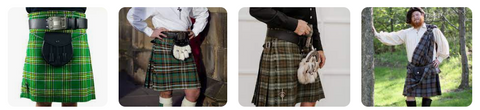
Modern Irish kilts may use county, provincial, organizational, family-name, or commemorative tartans. These designs can be meaningful heritage choices, but most should not be described as ancient family patterns passed down continuously from medieval Ireland.
If a specific Irish family-name tartan is being considered, check when it was designed and how it is registered rather than assuming that the pattern historically belonged to everyone with that surname.
Do Irish Men Wear Kilts at Weddings?
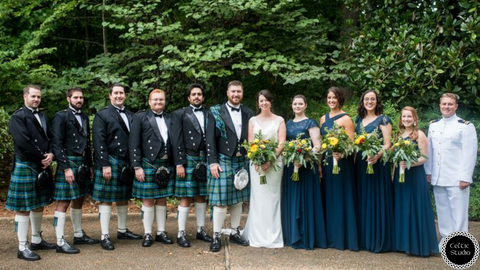
Some Irish and Irish-diaspora grooms choose kilts for weddings as a heritage statement. The outfit may use a solid-colour kilt, a county tartan, or another modern Irish-themed design.
Jackets, sporrans, hose, brogues, belts, and other accessories are frequently borrowed from the Scottish Highland dress system. That is a modern styling convention rather than evidence that the full Scottish outfit was historically traditional Irish wedding dress.
If you are comparing formal kilt accessories and dress levels, see the Scottish Kilt Outfit and Highland Dress Guide.
Can Anyone Wear an Irish Kilt?
Yes. There is no rule that only someone born in Ireland can wear an Irish kilt. If you are using the garment to represent a specific county, family, regiment, organization, or tartan, it is worth checking that association first.
The most respectful approach is simple: know whether the design is historical or modern, do not invent ancestry, and describe the garment for what it is.
Frequently Asked Questions About Irish Kilts
Do Irish people wear kilts?
Yes. Irish kilts are worn today for some weddings, heritage events, bands, performances, festivals, and diaspora celebrations.
Did medieval Irish men wear kilts?
The Scottish-style pleated kilt was not the standard native garment of medieval Ireland. Irish men are better documented wearing clothing such as the léine, brat, mantles, and trews.
Are kilts Irish or Scottish?
The kilt's historical development is Scottish, particularly Highland Scottish. Irish kilt traditions are later revival and modern adaptations.
What is an Irish saffron kilt?
It is a modern Irish kilt made in a saffron or mustard-coloured fabric, using a colour associated with Gaelic revival imagery rather than a Scottish clan tartan.
Are Irish county tartans ancient?
No. Many Irish county and family-name tartans are modern designs created for contemporary heritage use.
Can an Irish man wear a Scottish kilt?
Yes. Kilts are worn internationally today. If the kilt uses a specific clan or family tartan, it is best not to claim a connection that has not been verified.
Do Irish grooms wear kilts?
Some do, particularly in modern heritage-focused or diaspora weddings. It is a contemporary ceremonial choice rather than a universal Irish wedding tradition.
Can someone who is not Irish wear an Irish kilt?
Yes. Wearing one respectfully is generally a matter of context and accurate representation rather than ancestry alone.
Video: Irish Kilts and Heritage