

Contents:
Introduction to Burns Night
When Is Burns Night
The Significance of Burns Night
How to Celebrate Burns Night
Burns Night Supper Menu
Attire for the Occasion
Conclusion
Introduction to Burns Night
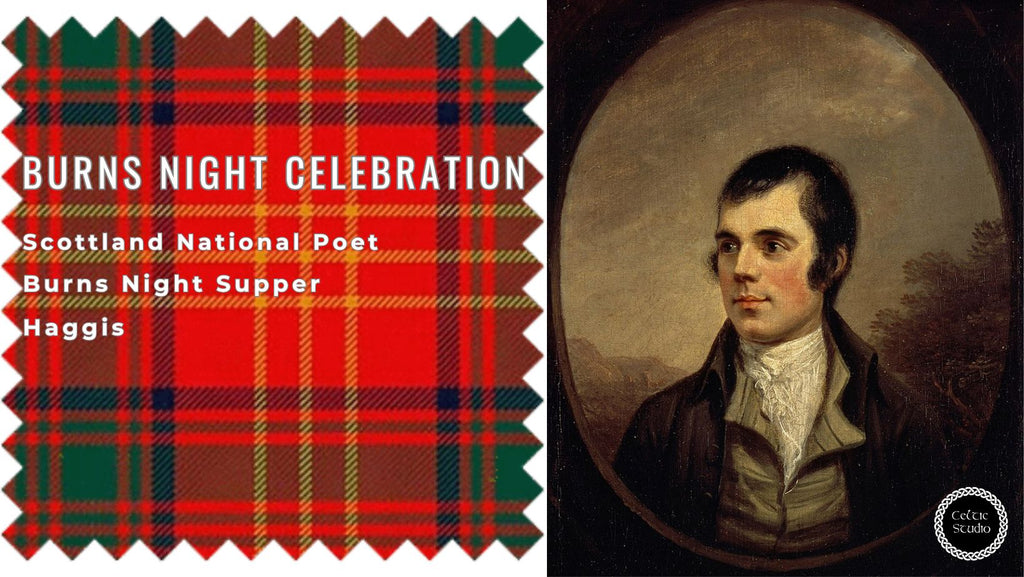
Robert Burns Night is an annual commemorative observance held on 25 January to mark the life and literary legacy of Robert Burns, the Scottish poet whose work holds a central place in Scotland’s cultural history. The observance is typically organized around a formal social gathering known as the Burns Supper. It is defined by poetry recitation, ceremonial dining, and structured public speaking, and it is best understood as a cultural institution shaped by post-Enlightenment Scottish civic and literary tradition rather than as a folk festival.
When Is Burns Night

Burns Night takes place each year on 25 January, corresponding to the birth date of Robert Burns in 1759. The date is fixed. Public and private observances commonly occur on the date itself, with some events scheduled on nearby evenings due to venue availability and travel constraints. This stability is part of what gives the observance its institutional character across Scotland and across Scottish diaspora communities.
The Significance of Burns Night
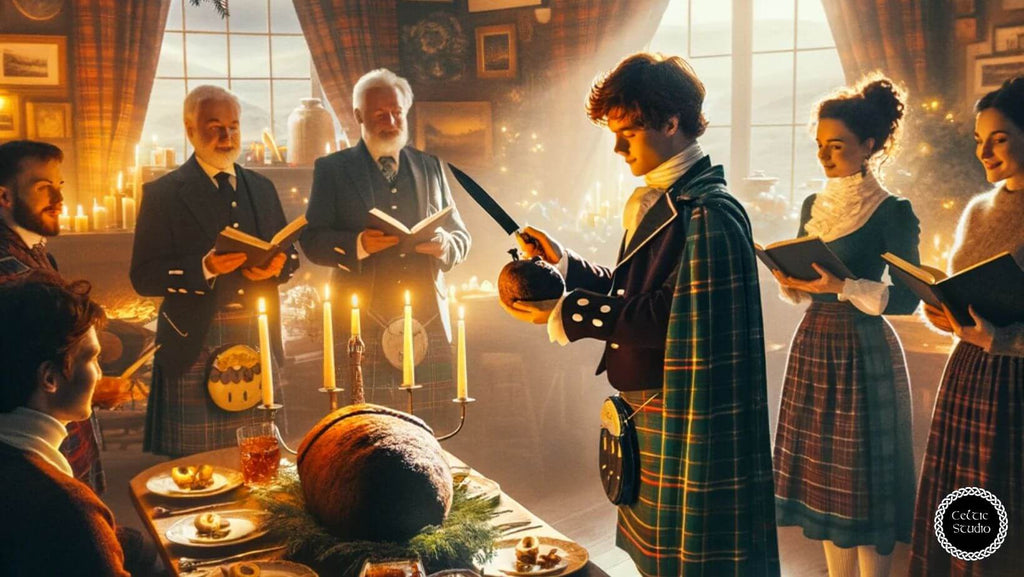
The significance of Burns Night lies in its function as a formal act of literary commemoration. It sustains public engagement with Burns’s poetry and songs, including works written in Scots, and it reinforces a shared cultural reference point within Scottish identity. The observance also persists because it is built on repeatable practices: spoken recitation, remembrance through public speech, and communal dining conducted with ceremonial order. These elements create continuity across generations and across geography without requiring a single official organizer or a uniform national program.
How to Celebrate Burns Night
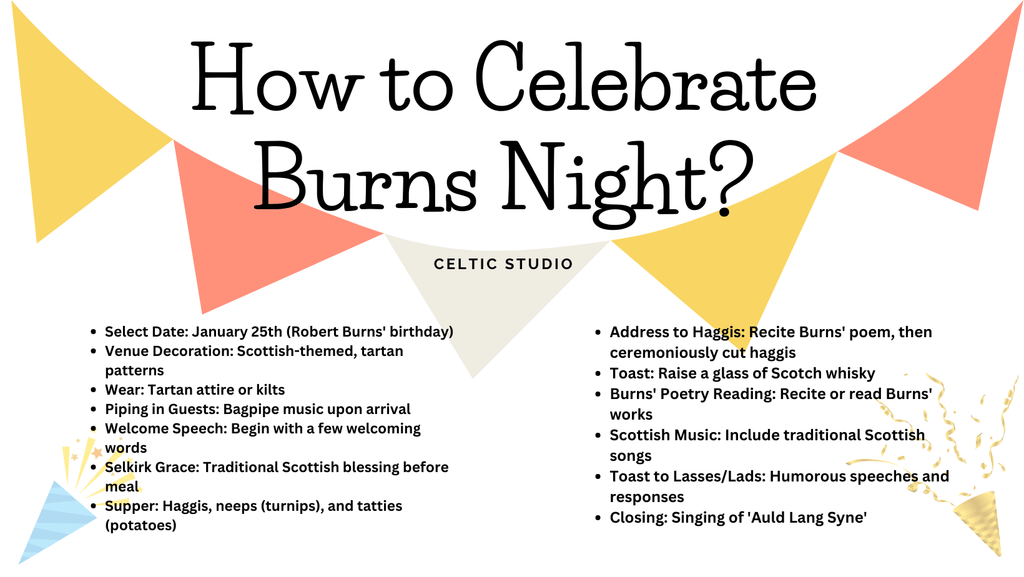
Celebration of Burns Night is structured around the Burns Supper, which follows an established ceremonial sequence. The Selkirk Grace is commonly used, though not universally, and the Address to a Haggis accompanies the formal presentation of haggis as the central dish. Public speeches and formal toasts are part of the standard pattern, including the Immortal Memory, which reflects on Burns’s life and work. Music often supports the ceremony, frequently with bagpipes or other Scottish traditional performances. Settings range from domestic dinners to formal club events, but adherence to this core structure distinguishes a Burns Supper from a themed social dinner.
Burns Night Supper Menu
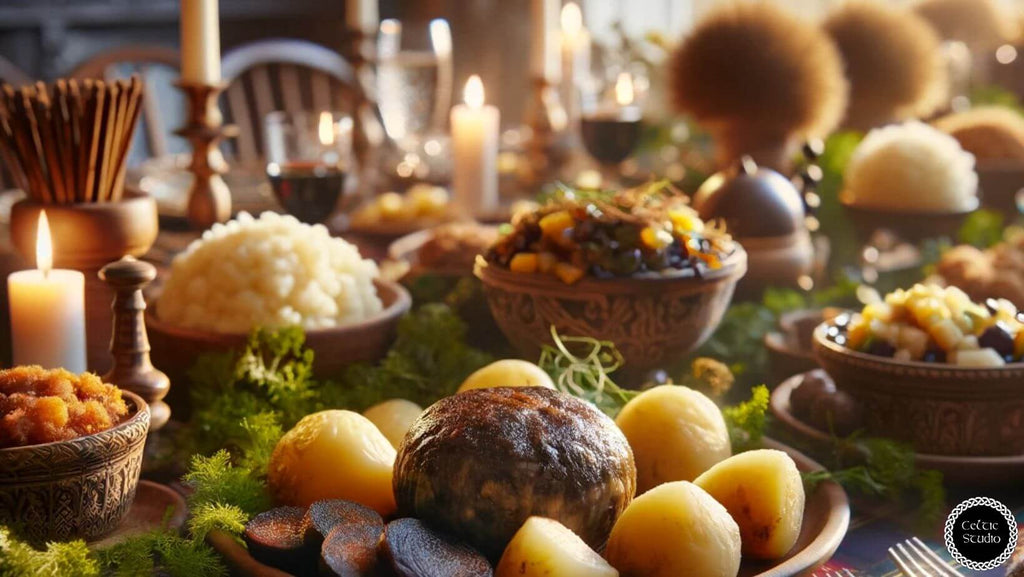
The Burns Supper menu is a recognizable culinary convention tied to the ceremony rather than a variable restaurant concept. Haggis is the central dish, customarily served with neeps and tatties. Whisky is traditionally used for formal toasts within the supper, functioning as part of the ritual rhythm rather than as a general drinking custom. Depending on the setting, the meal may be expanded into multiple courses, but the symbolic and ceremonial focus remains on the haggis course and the structured speeches that accompany it.
Attire for the Occasion
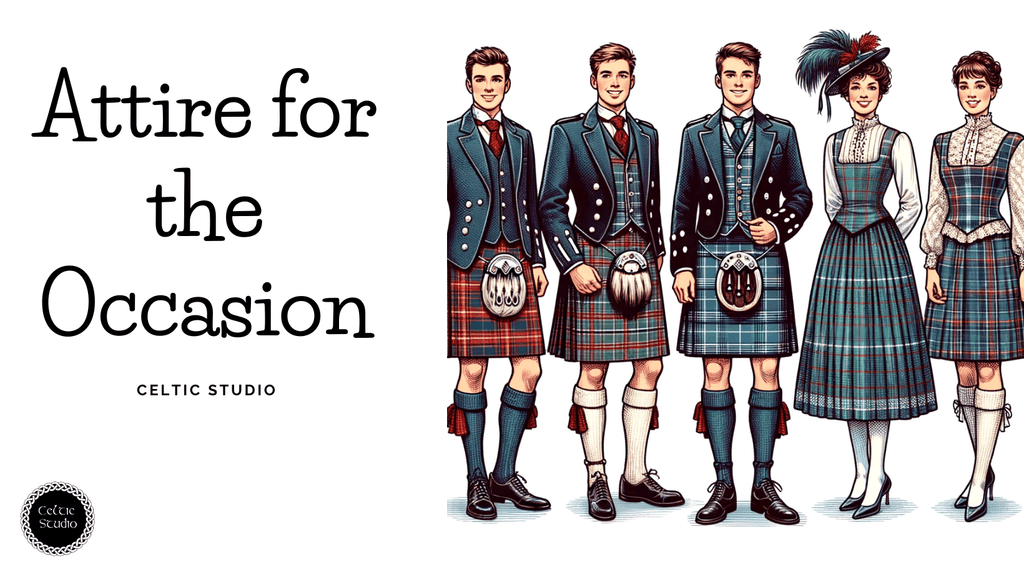
Attire for Burns Night depends on the event's formality and the hosting institution. In formal settings, Highland dress is commonly worn, including the kilt and associated components such as jacket, sporran, and appropriate footwear, while other participants may choose formal evening wear that aligns with the venue’s expectations. Tartan may appear as a kilt or as an accessory, and its use often signals respect for Scottish cultural symbolism rather than a requirement of protocol. The practical determinant is suitability for a seated meal and public speaking, with additional consideration for music and dancing, where those are part of the evening program.
Conclusion
Robert Burns Night persists because it combines a fixed commemorative date with a repeatable ceremonial structure. The Burns Supper provides the formal framework through which Burns’s poetry and cultural legacy are publicly reactivated by recitation, speech, and ritual dining. Observances in Scotland and in diaspora communities vary in scale, venue, and cost, but they remain recognizable when they preserve the core components that define the supper: literary performance, structured toasting, and a ceremonial meal centered on haggis.
Frequently Asked Questions About Burns Night
What is the purpose of Burns Night?
Burns Night exists to commemorate the life, poetry, and cultural influence of Robert Burns, Scotland’s national poet. The observance functions as a literary and social commemoration rather than a religious or state holiday. Its purpose is fulfilled through public recitation, formal speech, and a ceremonial meal that reactivates Burns’s work within a communal setting.
Is Burns Night only celebrated in Scotland?
Burns Night is most strongly associated with Scotland, but it is widely observed in countries with significant Scottish diaspora communities. Celebrations are common in England, Canada, the United States, Australia, and New Zealand. Outside Scotland, events are typically organized by Burns Clubs, Scottish societies, cultural institutions, or restaurants that adopt the standard Burns Supper format.
Is attending a Burns Supper required to observe Burns Night?
Attendance at a Burns Supper is not required, but the Burns Supper is the defining format through which Burns Night is traditionally observed. Private gatherings, public dinners, and institutional events all qualify as Burns Night observances when they retain the core elements of literary commemoration, structured speech, and ceremonial dining.
Is haggis mandatory at a Burns Night supper?
Haggis holds a central symbolic role in the Burns Supper, reinforced by the Address to a Haggis written by Robert Burns. While traditional observances include haggis, variations exist due to dietary preferences or local regulations. These adaptations do not invalidate the observance when the ceremonial structure is preserved.
Why is Burns Night held on 25 January?
Burns Night is held on 25 January because this date marks the birth of Robert Burns in 1759. Early commemorative suppers initially took place on different dates, including the anniversary of his death, but the observance was later standardized around his birthday during the nineteenth century.
Is Burns Night a formal event?
The level of formality depends on the venue and hosting institution. Club dinners and hotel banquets are often formal and may involve Highland dress or evening wear, while domestic and community events may be less formal. Formality is secondary to adherence to the ceremonial structure of the Burns Supper.